Posts

Everything You Should Know About Ischemic Stroke

Ischemic stroke is a type of stroke caused by a blockage in a blood vessel that supplies blood to the brain. It can be a life-threatening condition that requires immediate medical attention. The most common cause of ischemic stroke is a blood clot that forms in an artery in the brain. Other causes include heart disease, high blood pressure, high cholesterol, smoking, and diabetes. The symptoms of ischemic stroke may include sudden numbness or weakness in the face, arm, or leg, especially on one side of the body. Other symptoms may include confusion, trouble speaking or understanding speech, vision problems, dizziness, loss of balance or coordination, and severe headache. Ischemic Stroke Treatment typically involves restoring blood flow to the affected area of the brain. This can be done by administering clot-busting drugs, such as tissue plasminogen activator (tPA), or performing a mechanical thrombectomy procedure. Ischemic Stroke Treatment Centers and Doctors in Jalandhar If you are...
Parkinson’s Disease: Some Frequently Asked Question

Image
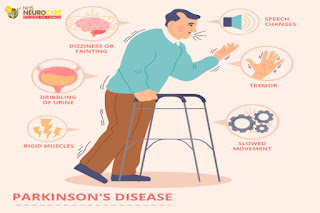
Q. What is Parkinson’s disease?  It is a progressive disorder that’s stops your brain from producing chemicals mainly dopamine that control our body’s movements. Taking Parkinson’s disease treatment can help normalise the symptoms but cannot cure the disease.  Q. What causes Parkinson’s disease? The actual cause behind Parkinson’s disease is still not discovered. But doctors speculates that due to the combination of genetic, environmental and lifestyle influences, it occurs. Usually, this condition starts to begin around the age of 60 or older. The risk associated with this disease increases with age. It has been seen that this disease affects men more than women. Having a family history of Parkinson's disease increases the possibilities for you to get it.  Q. Can Parkinson’s disease be prevented? As the reason behind Parkinson's is unknown, it is hard to find the prevention. Parkinson’s disease doctor in Jalandhar recommends that regular aerobic exercise help to reduc...

Understanding simple facts around brain stroke treatment

How a little knowledge on brain stroke can save a person’s life There are simple things to know about brain stroke that can ensure you are in a position to respond to such an emergency if it happens. ‘Knowledge is Power’ and in this case, it can save someone’s life. Using the FAST test to recognise symptoms of a stroke The acronym Facial weakness, Arm weakness, Speech slurred and Time to call the emergency is an easy way to remember and assess a stroke and respond quickly. Responding as soon as possible is very important for effective brain stroke treatment . Brain stroke treatment is time-sensitive The type of stroke that is due to low supply of blood to the brain, can be treated with the right medication to dissolve the clot causing the reduction in blood supply. However this is possible only if the person accesses the right kind of medical care within 4 hours of the onset of symptoms. You can acces s brain stroke treatment in Jalandhar at NHS NeuroCare. Seizures and strokes are d...

All You Wanted to Know about How Epilepsy affects a Pregnancy

What effects can epilepsy treatment have on pregnancy? If you are someone that suffers from epilepsy and are planning on a pregnancy, you need to weigh your condition well and plan your pregnancy accordingly. In order to balance your epilepsy treatment and make sure you have a healthy and safe pregnancy, it is always best to consult both your gynaecologist and neurologist for the best approach. Continue your medication as your doctor advises you While it is true that antiepileptic drugs can increase the chances of birth defects, over 90% of women go on to have healthy babies with no birth defects. It is important to note that it is not advisable to stop epilepsy treatment on one’s own, as an epileptic episode can have several serious consequences on the foetus.  Testing for birth defects It is possible to check the foetus for birth defects at 18 weeks of pregnancy.  Breastfeeding and antiepileptic drugs It has been found that small traces of antiepileptic drugs may be passed ...

Parkinson's Disease: Things You Need to Know

Image
Parkinson's disease is characterised by a progressive disorder that affects our nervous system and interfere in their functions. This condition affects body part’s movement controlled by those nerves. The most difficult thing with this condition is it starts to show symptoms very slowly. The first symptoms could be a barely noticeable tremor in just one hand maybe. However, it’s not about the tremor but this disorder also causes movement issues or stiffness in body. You must seek tremor treatment centre in Jalandhar to manage the disease better. Symptoms: The signs and symptoms for Parkinson's disease can be different for individual. Usually, the early signs are mild which go unnoticed. The symptoms start to show on one side of the body and get worsen in that part only. But at some point, the symptoms begin to affect the limbs functionality on both sides. Tremor- also characterised by rhythmic shaking, begins in a limb or hand or fingers. Rubbing thumb and forefinger ba...

Neurologist: Know When to see a Brain and Nerve Specialist

Image
You may have a headache, but how do you know if it’s just a headache or something more serious? If you’re experiencing any neurological symptoms, it’s important to see a neurologist to get an accurate diagnosis and proper treatment. A neurologist is a medical doctor who specializes in the diagnosis and treatment of disorders of the nervous system, which includes the brain, spinal cord, and nerves. A neurologist can help you if you’re experiencing issues with your memory, speech, vision, or movement. If you think you may need to see a neurologist, keep reading to learn more about when to seek out this type of specialist. When to see a neurologist? If you are experiencing any neurological symptoms, it is important to see a neurologist as soon as possible. A neurologist is a medical doctor who specializes in diagnosing and treating disorders of the nervous system, which includes the brain, spinal cord, and nerves. Some common reasons why people see a neurologist include: Headaches...

How to Know If You Need a Neurologist?

Image
You may not think you need a neurologist, but you may be surprised that you may actually need help. The unusual behaviours, frequent headaches and many other signs which are commonly neglected are capable of turning into a neurological disorder and you might need the help of an expert. Neurologists are trained in the diagnosis and treatment of disorders of the nervous system, which includes the brain, spinal cord, and nerve. In this blog post, we will explore some of the common reasons why people see a neurologist. From migraines and headaches to Alzheimer’s disease and dementia, read on to learn more about when you should see a neurologist. Signs you should not ignore Persistent or severe headache Changes in vision Weakness or numbness in the face, arms, or legs Loss of balance or coordination Difficulty speaking or swallowing Seizures Don't ignore these warning signs! If you are experiencing any of them, make an appointment to see a Neurologist . Neurological di...